
Lost and Found
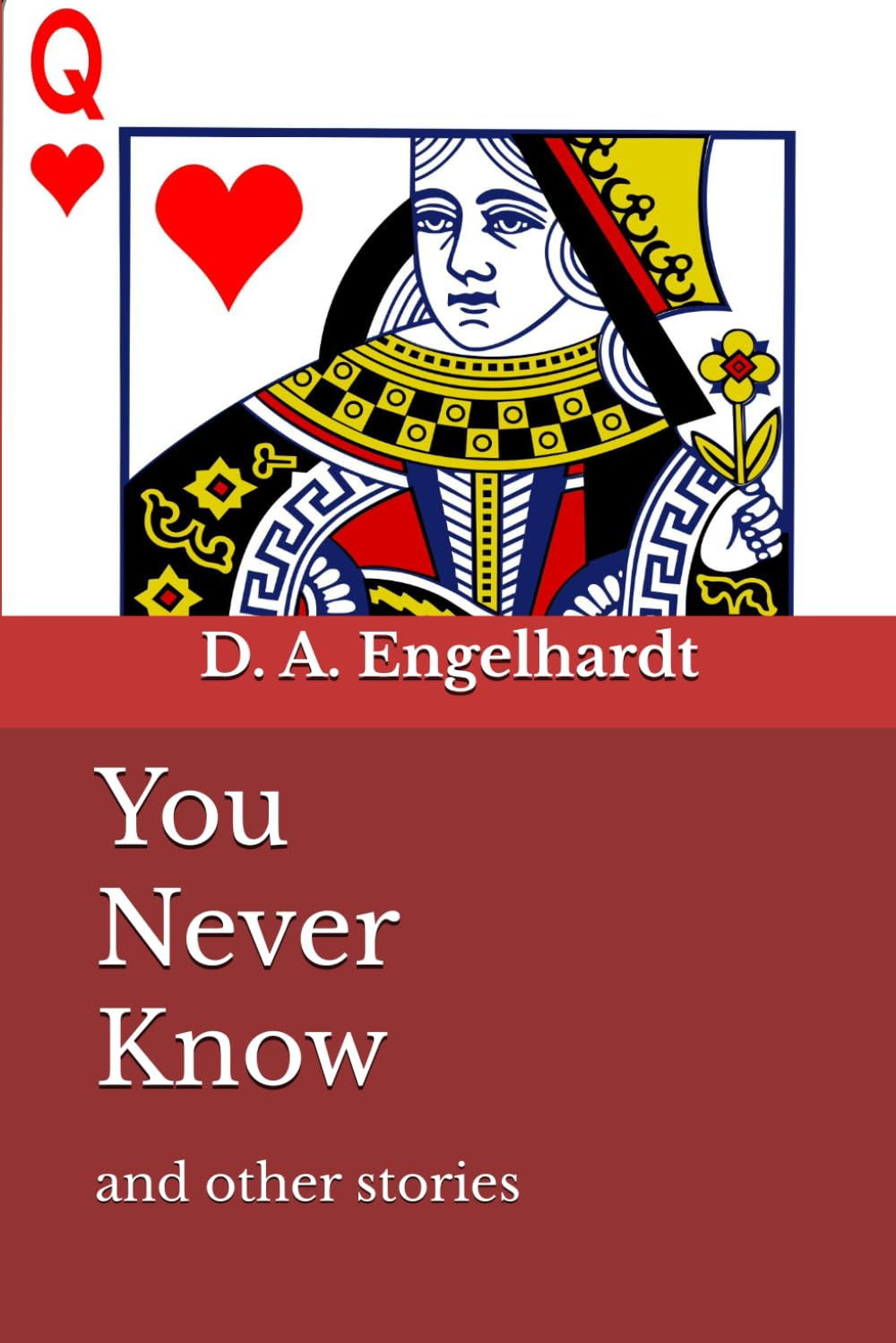
Excerpt from the second short story in You Never Know and other stories

Listen to the author reading:
In the short story, Lost and Found, Claire’s world is shattered when her husband, Michael, is killed in a tragic accident in front of the Musée d’Orsay in Paris. How can she make sense of her loss? How does she put together pieces that no longer fit?
Excerpt:
“So, what are you going to do?” Alison asked on one of her afternoon stops to check up on Claire.
“Grow my hair out?” Claire’s laugh felt as unaccustomed as a change of shoes when your feet are used to the same comfortable old pair.
“Short hair suits you, Claire. It really does.”
Claire’s hair had grown to the length of velvety stubble. “The kids thought I’d completely lost it.”
“Well, who could blame you?” Alison gave Claire’s head an affectionate rub.
After all you’ve been through. Alison didn’t say it, but Claire knew what she was thinking. “Well, shaving your head’s better than being burned alive with your husband’s body.”
“Claire!”
“And it’s better than moping around in black. I hate black. I don’t have a black thing in the house except for an evening dress I’ve worn maybe once. But to answer your question, I haven’t really figured it out yet. I mean, financially I’m good. There’s nothing owing on the house and once Paul pays out Michael’s half of the business and his life insurance comes through, I’ll be able to retire to Florida.”
“Florida? You’re not serious!”
“Good heavens, no! What would I want among all those surgically rejuvenated babes and chemically invigorated old goats?”
Alison laughed, and reached for Claire’s hand. “You could travel. When you’re ready, I mean.”
Claire took a deep breath. “I don’t know. For one thing where would I go all by myself?”
“Well, it’s time you got out of the house at least.”
“And met someone?”
“Claire, that’s not what I meant!”
“Besides, who don’t I know in Gibsons?”
“I wasn’t suggesting you meet someone. I know how attached—”
Claire pushed the box of Kleenex (she had boxes placed strategically all over the house) toward Alison, and blew her nose in unison. “I suppose I could sell the house and move to Vancouver.”
“You can’t,” Alison sniffed and dabbed her eyes, “sell your home. It’s one of the most beautiful houses Michael ever built.”
“I know, but what do I want in a house that was far too big before Michael d—.” The word “died” just wouldn’t come out. “There’s way too much space and I feel like ... like I’m floating on a piece of wreckage in the middle of the goddamn ocean and I can’t find the fucking shore for all the fog.” Claire started shoving things around on the table, like a magician with early onset Alzheimer’s. “Sorry, I’m such a big baby!”
“It’s OK, sweetie. You’re grieving. Look, before I run, I brought you something.” Alison dug into the carrier bag hanging on the back of her chair and handed Claire a pocketbook. Losing a Loved One: A Guide to Survival.
Claire walked Alison out onto the deck and watched her drive away. Back inside, she picked up the book and thumbed through the pages, like she always did, from back to front. Either the two authors had been very succinct, she judged from the predominance of white space, or they didn’t have a lot to say despite their prestigious postgraduate degrees. On the righthand page, there was what Claire assumed from the italicized typeface and the centred alignment to be a poem, and at the top of the opposite page a boldface headline and explanations listed in bullet points.
The headlines smacked of age-old wisdom and catchy homilies: You’re Vulnerable, Focusing on the Positive, Touching and Hugging. A load of common sense did not make the book less valuable, nor was Claire less grateful to Alison. But she had to wonder, as she always did about self-improvement and crisis management books, if the authors had ever experienced firsthand the suffering they were handing out advice on, or if they’d merely plagiarized what mothers and grandmothers and great-grandmothers had been saying for ages. The book, for all its good intentions, seemed disingenuous, and rather slapdash—an easy way to garner invitations on Oprah or Letterman.
Claire let the book fall open. You Will Survive.
“You will survive,” she repeated to herself. “How about that!” Everything she perused rang true ostensibly, but it still sounded corny, like something you pulled out of a fortune cookie. She bet people who stuffed fortune cookies killed themselves laughing. Maybe the authors of this book did, too.
You Will Survive.
One of the sub-points stated that everything had a beginning, a middle and an end. Of course, the authors had failed, in all their wisdom, to mention what kind of end. But Claire knew without further elucidation that in order to find her end, she’d have to keep on going, provided grief didn’t do her in first.
Coming next: An excerpt from the short story, Fat Chance.
Reader reviews
Great Story Telling! ⭐⭐⭐⭐⭐
This book was very hard to put down once I started reading and the stories were well written and interesting. - Wayne Sundstrom, Saskatoon, Canada
Highly recommended! ⭐⭐⭐⭐⭐
This collection is an excellent read full of human stories that everyone can relate to. EGE, Victoria, Canada
Read an excerpt from the novella, You Never Know.
You can order You Never Know and other stories from
or directly from me by emailing dianeengelhardt2019@gmail.com for details.
Alternatively, you can obtain a free e-book by agreeing to write a review that I will publish, gratefully, on Substack and other platforms. Again, email me for details.
I have read thousands of books. I majored in Lit. Now, I am into non-fiction.
The fking mess the human race is creating.
Your poetry is probably the only "art writing" I read. It's about a very sad reality.
Keep it up. One has to create in order to use their human skills.
Me: still sewing, cooking, gardening, repairing and researching.
I'm so glad I didn't "marry well"....then all I would have is shopping. ..and hanging out with other wealthy women.
Quel spectacle d'horreur !